Solar Products · Refrigeration & Freezing
Solar-Powered Refrigeration & Freezing Appliances
Keep food, beverages and other temperature-sensitive goods at the right temperature with refrigeration powered by the sun. This guide explains how solar refrigeration and freezing work, where they make sense, and what to consider before choosing a system for your home or business.
Overview
Why Refrigeration Is Worth Powering With Solar
Refrigerators and freezers run around the clock, which makes them among the most consistent electricity users in any home or business. For shops, restaurants, food vendors and storage operations, that steady demand can make cooling one of the largest items on the energy bill.
Pairing refrigeration with a correctly sized solar system can offset a meaningful share of that consumption. With battery storage, it can also help keep products cold through power outages or in locations where the grid is unreliable or unavailable.
The key is matching the appliance, the solar array and the storage to how the equipment is actually used.
Appliance Types
Common Solar Refrigeration & Freezing Appliances
Solar cooling covers a wide range of equipment. These are the most common appliance types and what each one is typically used for.
Solar Refrigerators
Upright or chest-style fridges designed for efficient chilled storage, available as DC units that run directly from solar and batteries or as efficient AC models paired with an inverter.
Chest Freezers
Top-opening freezers hold cold air well when opened, which makes them one of the most energy-efficient formats for frozen storage and a common choice for solar systems.
Upright Freezers
Front-opening freezers with shelves for easier organization and access. They suit kitchens and storage areas where floor space is limited.
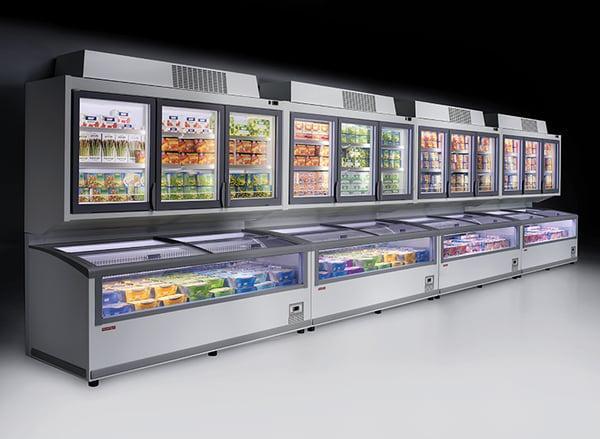
Display Chillers & Beverage Coolers
Glass-door units for retail and hospitality that keep drinks and chilled goods visible to customers. Glass and frequent opening raise energy demand, so sizing matters.
Fridge-Freezer Combinations
Units with separate chilled and frozen compartments that cover both needs in a single footprint, suitable for homes, offices and small businesses.
Commercial Under-Counter Units
Compact refrigerators and freezers built into kitchen and bar workstations, keeping ingredients within reach during service.
How It Works
How a Solar Refrigeration System Works
A solar refrigeration setup is more than the appliance itself. Each component plays a role in keeping temperatures stable around the clock.
Solar panels generate power
Panels convert sunlight into electricity during daylight hours.
A controller or inverter manages it
A charge controller regulates battery charging; for AC appliances, an inverter converts DC power to AC.
Batteries store energy for later
Excess daytime energy is stored so the appliance keeps running at night and on cloudy days.
The appliance keeps contents cold
The refrigerator or freezer draws power from the system to hold its set temperature.
Backup covers the gaps (optional)
A grid connection or generator can serve as backup where uninterrupted cooling is essential.
System Options
DC vs AC Solar Refrigeration
Solar refrigeration generally falls into two approaches. The right one depends on your existing equipment, your energy setup and how many other loads the system needs to power.
DC Solar Appliances
Purpose-built units that run directly on DC power from solar panels and batteries.
- No inverter needed for the appliance, reducing conversion losses
- Typically very energy-efficient compressors
- Well suited to off-grid and remote locations
- A dedicated, self-contained cooling system
AC Appliances With an Inverter
Standard appliances powered through an inverter as part of a wider solar system.
- Works with conventional, widely available appliances
- Can share the system with lighting, fans and other loads
- Easier to integrate with grid or generator backup
- Inverter efficiency and startup surge must be accounted for
Applications
Who Solar Refrigeration Is For
Solar-powered cooling can suit a range of settings where reliable refrigeration matters.
Shops & Mini-Marts
Chilled drinks, dairy and frozen goods in retail settings.
Restaurants & Hospitality
Kitchen refrigeration, bar coolers and cold storage for daily service.
Beverage & Food Distributors
Holding stock at the right temperature before it moves to customers.
Food Vendors & Caterers
Reliable cooling for ingredients and prepared food.
Off-Grid & Remote Sites
Refrigeration where grid power is unavailable or unreliable.
Homes
Lower energy costs and food protection during outages.
Before You Choose
Key Considerations for Sizing a System
An undersized system can leave products at risk; an oversized one costs more than it needs to. These factors help determine the right appliance and solar configuration for your situation.
Storage capacity
How much product you need to keep cold or frozen, usually measured in liters or cubic feet.
Temperature range
Chilled storage and frozen storage have very different energy needs.
Daily energy consumption
The appliance’s rated energy use (kWh per day) drives the size of the solar array and battery.
Days of autonomy
How long the system should keep running without sun, which determines battery capacity.
Ambient temperature & ventilation
Hot environments make compressors work harder; placement and airflow matter.
Door openings & usage
Frequent opening, glass doors and warm products loaded in all increase demand.
Maintenance & service access
Clean condenser coils, intact door seals and access for servicing keep efficiency up.
Benefits
Benefits of Solar Refrigeration
Actual results depend on the appliance, system design, location and how the equipment is used.
Lower Cooling Energy Costs
Solar can offset part or all of the electricity your refrigeration uses, depending on system size and usage.
Protection During Outages
With adequate battery storage, cooling can continue when grid power goes down, helping protect stock.
Cooling Where the Grid Doesn't Reach
Properly designed systems make refrigeration possible at off-grid and remote sites.
Cleaner Energy Use
Running continuous loads on solar reduces reliance on fossil-fuel generation.
Solar Financing
Explore Financing for Your Solar Project
For customers who prefer not to cover the full installation cost upfront, Star Solar can connect qualified customers with independent third-party financing providers.
Financing approval, terms, rates, and eligibility are determined by the independent financing provider.
FAQ
Refrigeration & Freezing FAQs
Can solar power a refrigerator or freezer 24 hours a day?
Yes, when the system includes enough battery storage to cover nighttime and cloudy periods. Panels, batteries and the appliance need to be sized together based on the appliance’s daily energy use and your local sunlight.
Do I need special appliances, or can I use my existing ones?
Both are possible. Existing AC appliances can run through an inverter, while purpose-built DC units can run directly from solar and batteries and are often more efficient. Older, less efficient equipment may require a larger system.
How many solar panels does a refrigerator need?
It depends on the appliance’s daily energy consumption, the amount of sunlight at your location, battery size and whether the system powers other loads. Our team can help work this out during an assessment.
What happens during several cloudy days?
Batteries supply power when solar output is low. The number of days the system can run without sun depends on battery capacity. Where cooling must never stop, a grid or generator backup is recommended.
Is solar refrigeration suitable for a commercial business?
It can be, from small shops to restaurants and distributors. Commercial use typically involves heavier loads and more frequent door openings, so careful sizing is important.
How do I get started?
Contact the Star Solar Energy team with details about the appliances you use or plan to use, your storage needs and your location. We’ll help you understand the options that may fit your situation.
Not Sure Which Setup Is Right for You?
Tell us what you need to keep cold, where the equipment will operate and how you use it. Our team will help you understand the solar refrigeration options that fit your needs.