Solar Products · Agriculture
Solar Cold Rooms for Agriculture
Keep freshly harvested produce cooler for longer with cold storage powered by the sun. This guide explains how solar cold rooms work, what they can store, and what to consider when planning cold storage for your farm or agricultural business.
Overview
The Clock Starts at Harvest
Fresh produce is still alive after it’s picked. It continues to breathe, lose moisture and ripen, and warm temperatures speed all of that up. Without cooling, quality can drop within days or even hours.
A cold room slows these processes by holding produce at a controlled temperature and humidity. That can help extend shelf life, reduce losses and give growers more control over when and where they sell.
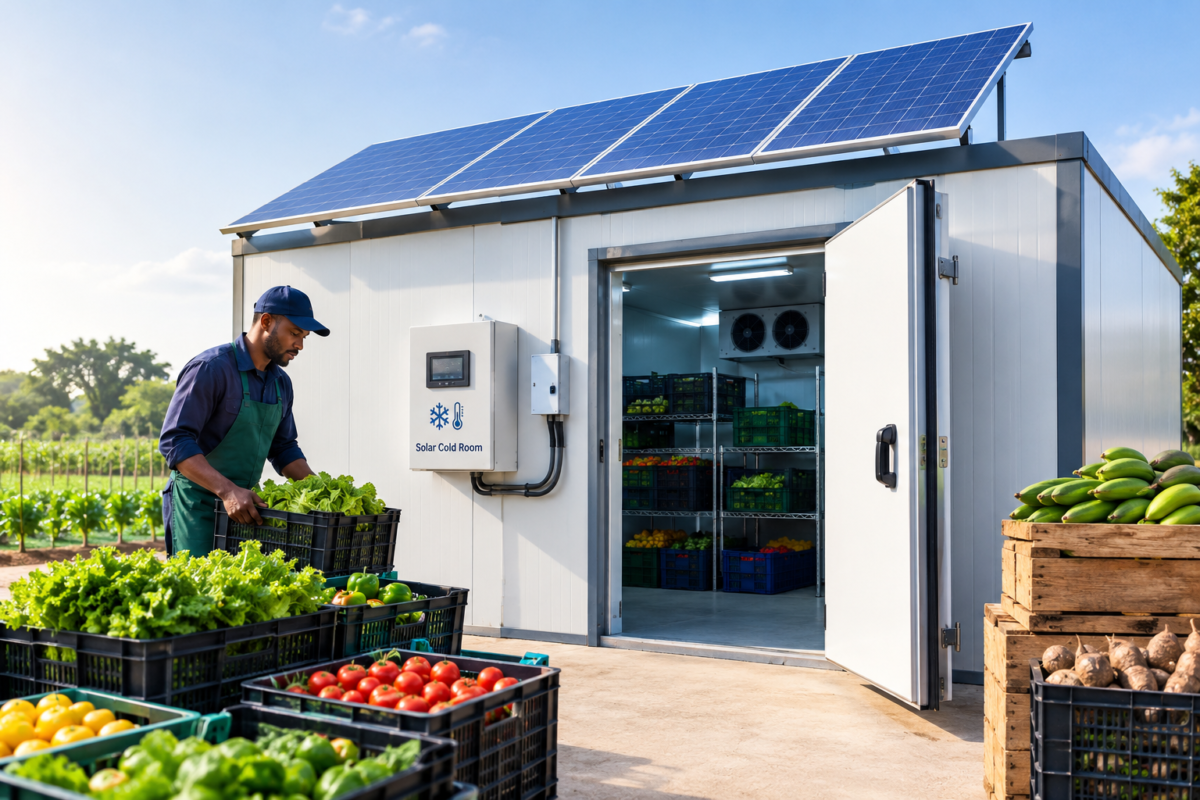
Solar-powered cold rooms make this possible on farms and at collection points where grid electricity is expensive, unreliable or unavailable.
What You Can Store
Produce Suited to Cold Room Storage
Different crops need different conditions. Understanding what you’ll store is the first step in designing the right cold room.
Leafy Greens & Herbs
Lettuce, spinach and fresh herbs wilt quickly. They generally keep best near freezing with high humidity to prevent moisture loss.
Root & Bulb Vegetables
Carrots, beets and similar crops store well in cold, humid conditions. Some bulb crops such as onions prefer drier air.
Temperate Fruits
Apples, berries, grapes and stone fruits benefit from cold storage, which slows ripening and softening.
Chilling-Sensitive Produce
Tomatoes, bananas, mangoes, citrus and other warm-climate crops can be damaged by too much cold, so they need cool rather than cold storage.
Fruiting Vegetables
Peppers, cucumbers and squash keep longer with moderate cooling and the right humidity.
Flowers & Nursery Stock
Cut flowers and plants hold their freshness longer in a cool, controlled environment.
Components
What Makes Up a Solar Cold Room
A solar cold room is a complete system. Each component affects how well it holds temperature and how much energy it uses.
Insulated Panels
Well-insulated walls, ceiling and floor keep cold in and heat out. Insulation quality has a direct effect on how much energy the room needs.
Refrigeration Unit
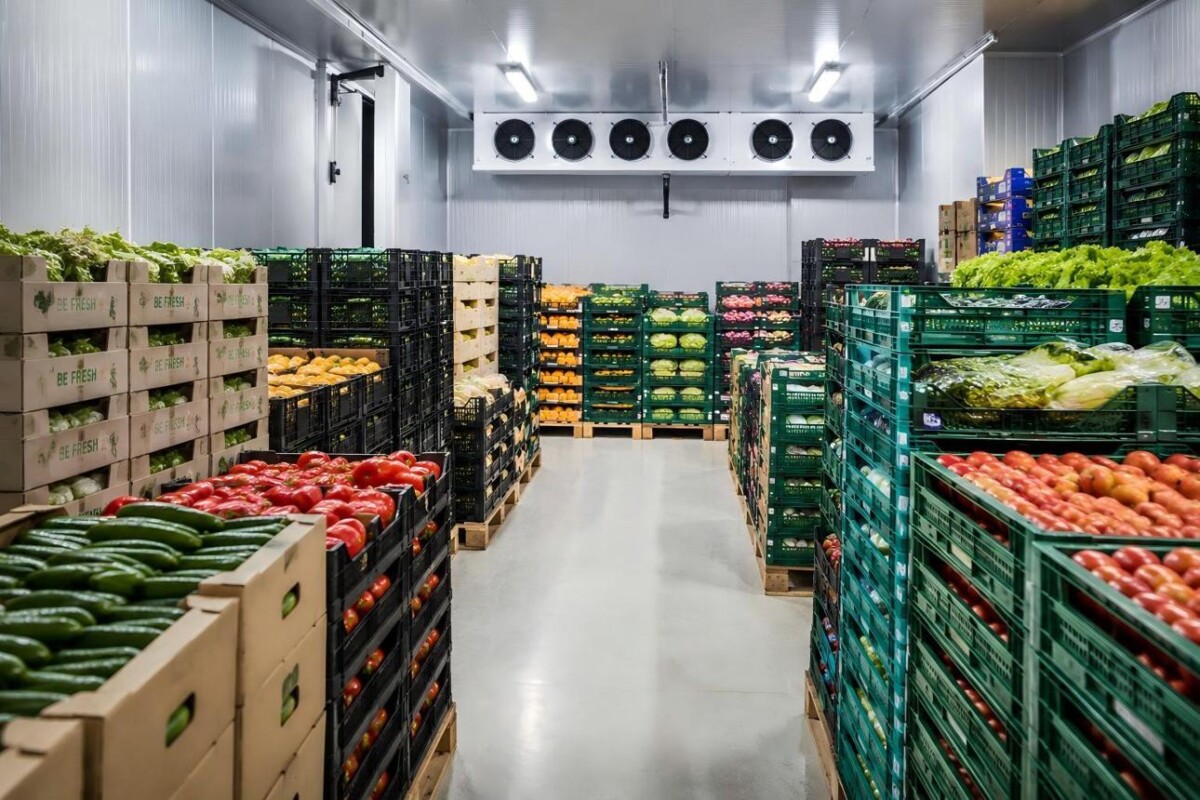
The compressor and evaporator remove heat from the room. Efficient, appropriately sized units reduce the solar capacity required.
Solar Array
Panels on the roof or nearby ground mounts generate the power that runs the refrigeration system.
Energy or Thermal Storage
Batteries, or thermal storage such as ice or phase-change materials, keep the room cold at night and on cloudy days.
Temperature & Humidity Controls
Controls hold the room at the setpoints your produce needs and prevent it from getting too cold or too dry.
Monitoring
Temperature monitoring, and in some systems remote alerts, help you spot problems before they affect your produce.
How It Works
How a Solar Cold Room Works
Solar cold rooms are designed to keep produce cool around the clock, not just while the sun is shining.
Solar panels generate power
The array produces electricity during daylight hours.
The refrigeration unit cools the room
Solar power runs the compressor, pulling heat out of the insulated space.
Extra energy is stored
Surplus daytime energy is stored in batteries or as thermal energy for the night.
Controls hold steady conditions
Temperature and humidity are kept at the levels your produce needs.
Backup provides security
A grid connection or generator can step in during long cloudy periods.
Best Practices
Getting the Most From Cold Storage
How produce is handled before and during storage matters as much as the cold room itself.
Harvest During Cool Hours
Picking in the early morning reduces the field heat produce carries into the cold room.
Remove Field Heat Quickly
Pre-cooling produce soon after harvest protects quality and eases the load on the cold room.
Sort Before Storing
Removing damaged or diseased produce helps prevent spoilage from spreading.
Keep Compatible Crops Together
Some fruits release ethylene, which speeds ripening in nearby produce. Separate them where possible.
Limit Door Openings
Every opening lets warm air in. Plan loading and unloading to keep the door closed as much as possible.
Allow Airflow
Stack crates with gaps so cold air can circulate evenly around all of the produce.
Who It's For
Who Uses Solar Cold Rooms
Solar cold storage can serve operations of many sizes across the agricultural supply chain.
Farmers & Growers
Store harvests on the farm and sell when the timing and price are right.
Produce Aggregators
Hold produce collected from multiple growers before it moves to market.
Farmer Cooperatives
Shared cold storage that serves a group of members.
Markets & Wholesalers
Keep stock fresh between delivery and sale.
Packhouses & Distributors
Maintain the cold chain from packing through shipment.
Food Banks & Community Programs
Extend the life of donated and community-grown produce.
Before You Plan
Key Considerations for a Solar Cold Room
A cold room sized and designed for your crops and workflow will protect produce more reliably and cost less to run. These factors shape the right configuration.
Produce type & mix
Different crops need different temperatures and humidity, and some shouldn’t be stored together.
Volume & room size
How much produce you need to store at peak harvest determines the size of the room.
Daily loading
How much warm produce enters each day is a major driver of cooling demand.
Storage duration
Short holding before market and longer seasonal storage call for different designs.
Site & climate
Hot climates and sun-exposed sites increase the cooling load; shading and orientation help.
Energy storage & backup
The amount of battery or thermal storage determines how well the room holds temperature overnight and in poor weather.
Access & logistics
Location relative to fields, roads and buyers affects how well the cold room fits your workflow.
Benefits
Benefits of Solar Cold Rooms
Actual results depend on the crops, system design, location and how the cold room is used.
Reduce Post-Harvest Losses
Controlled cooling can help more of your harvest reach buyers in good condition.
Sell on Your Schedule
Storage gives growers more flexibility on when and where they sell, rather than selling everything at once.
Cold Storage Beyond the Grid
Properly designed systems make cold storage possible on farms and at sites with limited grid access.
Lower Operating Costs
Solar can offset a large share of the energy used for cooling, depending on system size and usage.
Solar Financing
Explore Financing for Your Solar Project
For customers who prefer not to cover the full installation cost upfront, Star Solar can connect qualified customers with independent third-party financing providers.
Financing approval, terms, rates, and eligibility are determined by the independent financing provider.
FAQ
Solar Cold Room FAQs
Can a solar cold room stay cold at night?
Yes, when it includes enough battery or thermal storage. Good insulation and limiting door openings at night also help the room hold its temperature until the sun returns.
Can I store different crops in the same cold room?
Sometimes. Crops that need similar temperature and humidity can often share a room, but ethylene-producing fruits and chilling-sensitive produce may need to be kept separate or stored in a different room.
What's the difference between a cold room and a freezer room?
A cold room keeps produce chilled above freezing to slow spoilage. A freezer room keeps products frozen, which suits items like meat and fish. Each requires a different refrigeration design.
How long can produce be stored in a cold room?
It varies widely by crop, its condition at harvest and the storage conditions. Some leafy greens last days to a couple of weeks, while some fruits and root crops can keep for months.
What size cold room do I need?
It depends on your peak harvest volume, how much produce you load each day and how long you store it. Our team can help work this out with you.
How do I get started?
Contact the Star Solar Energy team with details about your crops, volumes, storage needs and location. We’ll help you understand the options that may fit your operation.
Protect More of Your Harvest
Tell us what you grow, how much you need to store and where you operate. Our team will help you understand the solar cold room options that may fit your needs.