Solar Products · Dairy Industry
Solar Solutions for the Dairy Industry
From milk cooling to water heating, dairy operations depend on reliable energy every day of the year. This guide explains where solar can support dairy farms, collection centers and processors, and what to consider when planning a solar-powered system.
Overview
Energy Is Central to Dairy Quality
Milk leaves the animal warm and must be cooled quickly to protect its quality and meet applicable food-safety requirements. On top of cooling, dairy operations rely on power for milking equipment, hot water for cleaning, pumping, lighting and ventilation.
Because these loads run every day, energy can be one of the most significant operating costs for a dairy business. Where the grid is unreliable, power interruptions can also put product at risk.
A well-designed solar system can offset a meaningful share of this energy use. Combined with battery or thermal storage, it can also help keep critical cooling running when it’s needed most.
Applications
Where Solar Can Support a Dairy Operation
Energy is used at nearly every stage of dairy production. These are the main areas where solar power can make a difference.
Milk Cooling
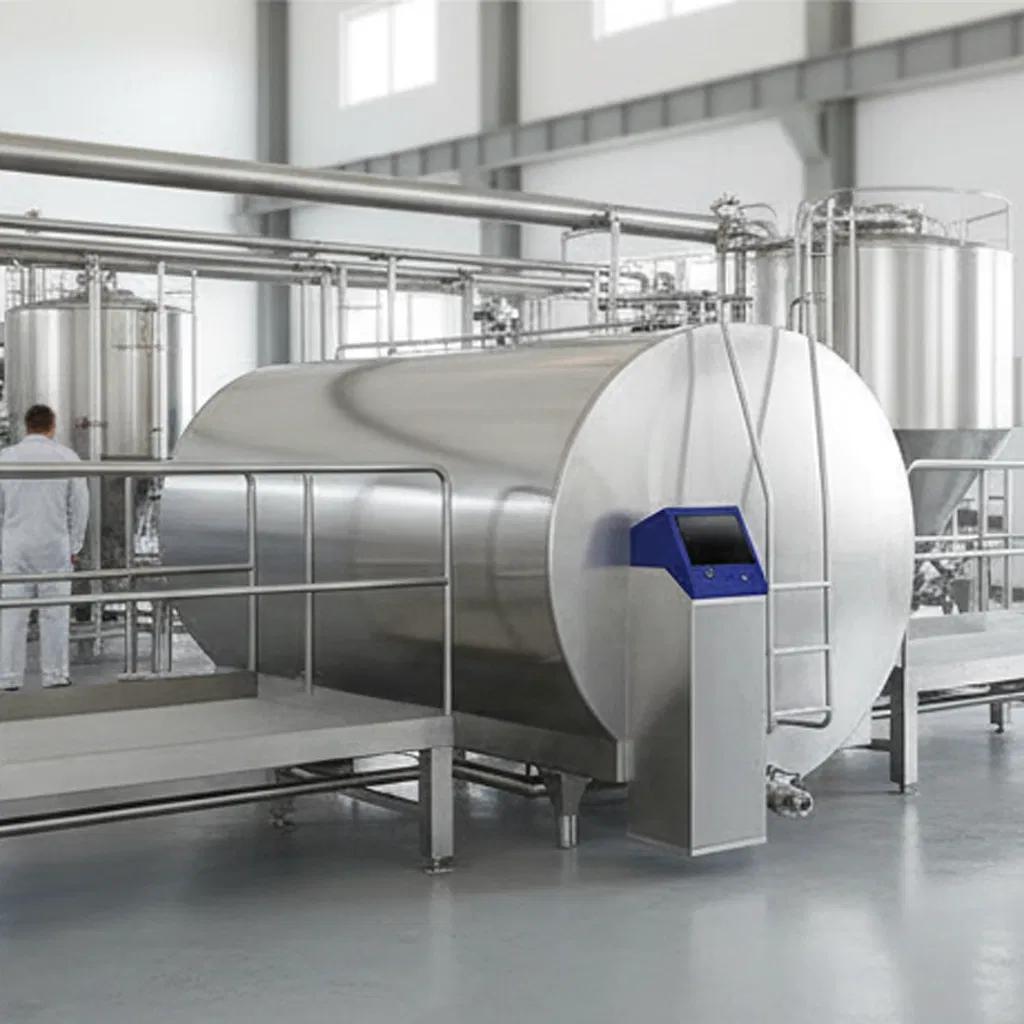
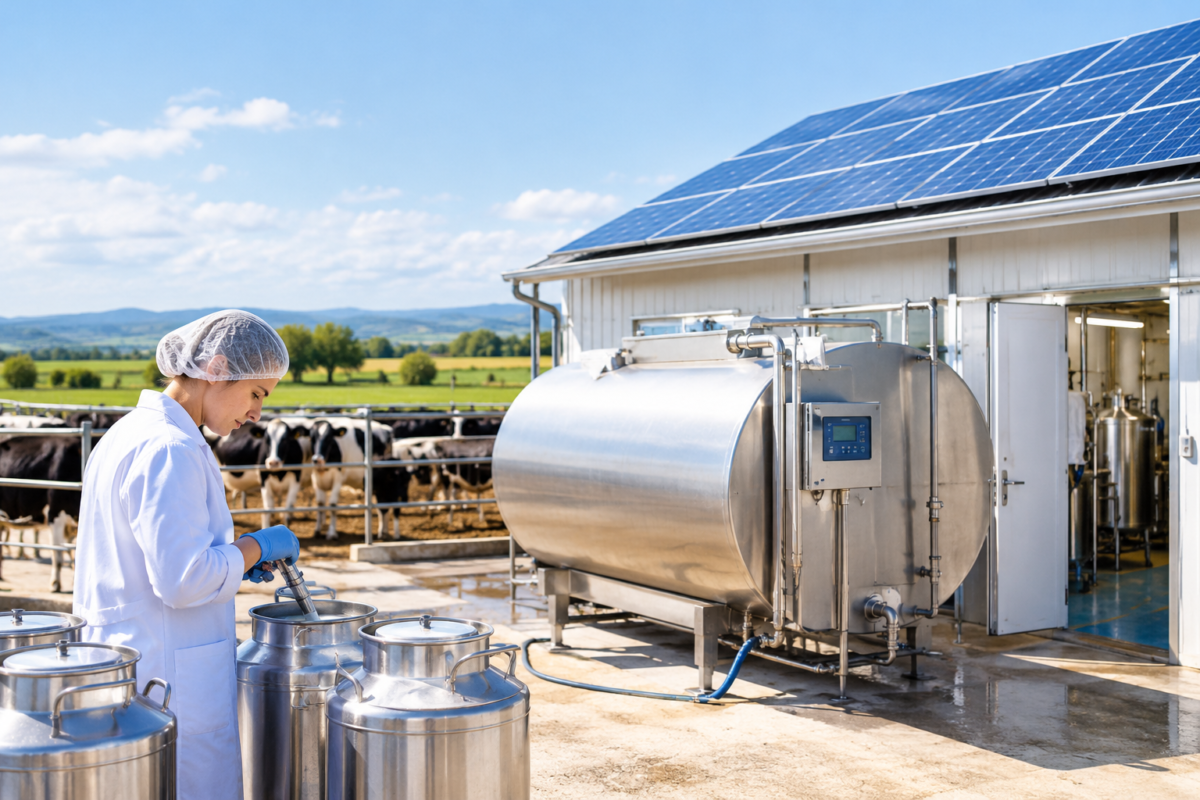
Bulk tanks and cooling systems bring fresh milk down to safe storage temperatures and hold it there until collection. This is typically the largest electrical load on a dairy farm.
Refrigerated Storage
Cold rooms and refrigerators keep milk and finished dairy products such as cheese, yogurt and butter at the right temperature.
Water Heating for Cleaning
Hot water is essential for cleaning milking equipment, lines and tanks. Solar water heating or heat recovery can reduce this demand significantly.
Milking Equipment
Vacuum pumps and milking machines run during every milking session and add up to a substantial share of energy use.
Water Pumping
Pumps supply water for animals, cleaning and pre-cooling. Solar-powered pumping is a well-established application.
Lighting & Ventilation
Barn fans, lighting and climate control support animal comfort and working conditions throughout the day.
Milk Cooling
Approaches to Solar-Powered Milk Cooling
Milking often happens early in the morning and in the evening, outside peak solar hours. Storage is what bridges that gap. These are common approaches.
Ice Bank & Thermal Storage
The cooling system builds up ice or chilled water while the sun is shining, then uses that stored cold to cool milk at milking time. Storing cold instead of electricity can be a cost-effective match for solar.
Battery-Backed Direct Cooling
Solar charges batteries during the day, and the bulk tank's refrigeration system runs on stored energy during early morning and evening milkings.
Pre-Cooling With Plate Coolers
Milk passes through a plate heat exchanger cooled by water before it reaches the tank, reducing the load on refrigeration. Solar can power the water pumps.
Variable-Speed Compressors
Variable-speed refrigeration matches output to the cooling needed, reducing energy use and making the system easier to power with solar.
How It Works
How a Solar System Supports Dairy Operations
A solar setup for dairy brings together generation, storage and backup so that temperature-critical processes stay protected.
Solar panels generate power
Panels on barn roofs or ground mounts produce electricity during daylight hours.
Controllers & inverters manage it
Equipment regulates charging and converts power for AC loads such as compressors and pumps.
Energy is stored
Batteries store electricity, or ice banks store cold, for use during milking times and at night.
Dairy equipment runs
Cooling, pumping, milking and lighting loads draw from solar and storage first.
Backup protects the milk
A grid connection or generator provides backup so cooling is never interrupted.
Who It's For
Dairy Businesses That Can Benefit
Solar can support dairy operations of many sizes, from a single farm to a processing facility.
Dairy Farms
Small family farms to larger herds looking to reduce energy costs and protect milk quality.
Milk Collection Centers
Facilities that receive and cool milk from multiple farms before transport.
Creameries & Processors
Cheese, yogurt and butter producers with cooling, heating and processing loads.
Dairy Cooperatives
Shared infrastructure serving groups of producers.
Dairy Distributors
Operations holding products in cold storage before delivery.
Remote & Off-Grid Farms
Locations where grid power is unavailable, expensive or unreliable.
Before You Plan
Key Considerations for Dairy Solar Systems
Every dairy operation has its own production volume, schedule and equipment. These factors help shape a solar system that fits how your operation actually works.
Daily milk volume
The amount of milk produced or received each day determines the cooling capacity required.
Milking schedule
Milking times decide how much energy must be stored to cool milk outside peak solar hours.
Temperature & regulatory requirements
Systems must cool and hold milk within the time and temperature limits set by applicable regulations.
Existing equipment efficiency
Older compressors and pumps use more energy, which increases the solar capacity needed.
Hot water demand
Cleaning requirements affect whether solar water heating or heat recovery should be part of the plan.
Grid reliability & backup
Where outages occur, backup power is essential to protect milk in storage.
Space for solar panels
Barn roofs, sheds and open land all offer potential installation sites.
Efficiency First
Reduce Energy Use Before Sizing Solar
Improving efficiency lowers the energy your operation needs, which means a smaller, more affordable solar system can cover more of your load.
Pre-Cool Milk
Plate coolers using well water remove heat before milk reaches the tank, easing the refrigeration load.
Add Variable-Speed Drives
Variable-speed drives on vacuum pumps and motors adjust output to demand and cut energy use.
Recover Waste Heat
Heat recovered from refrigeration compressors can preheat cleaning water instead of being wasted.
Upgrade Lighting & Fans
LED lighting and efficient ventilation fans reduce daily loads in barns and parlors.
Benefits
Benefits of Solar for Dairy
Actual results depend on the equipment, system design, location and how the operation runs.
Lower Energy Costs
Solar can offset a meaningful share of the electricity used for cooling, pumping and milking, depending on system size and usage.
Protection for Your Milk
Storage and backup help keep cooling running through outages, protecting product quality.
Power for Remote Operations
Properly designed systems can bring reliable cooling to farms and centers with limited grid access.
A Cleaner Supply Chain
Using solar reduces reliance on fossil-fuel generation across dairy production.
Solar Financing
Explore Financing for Your Solar Project
For customers who prefer not to cover the full installation cost upfront, Star Solar can connect qualified customers with independent third-party financing providers.
Financing approval, terms, rates, and eligibility are determined by the independent financing provider.
FAQ
Dairy Solar FAQs
Can solar power a milk cooling system?
Yes. With a correctly sized solar array and storage, solar can power milk cooling. Because milking often happens outside peak sun hours, batteries or thermal storage such as an ice bank are usually part of the design.
What happens to my milk if the solar system can't keep up?
A well-designed system includes backup, such as a grid connection or generator, so cooling continues even during extended cloudy periods or unusually high demand.
Can solar work with my existing bulk tank and equipment?
In many cases, yes. Existing equipment can often be powered by solar, though older or less efficient units may require a larger system. Efficiency upgrades are worth considering alongside solar.
Is solar suitable for small dairy farms?
It can be. Systems can be scaled to the farm’s milk volume and energy use, and smaller operations in areas with unreliable power often see strong value in protecting their milk.
Can solar help with hot water for cleaning?
Yes. Solar water heating, or heat recovered from refrigeration compressors, can reduce the energy used to heat water for cleaning milking equipment and tanks.
How do I get started?
Contact the Star Solar Energy team with details about your milk volume, milking schedule, existing equipment and location. We’ll help you understand the options that may fit your operation.
Let's Talk About Your Dairy Operation
Tell us about your milk volume, milking schedule, equipment and location. Our team will help you understand the solar options that may fit your dairy business.