Solar Products · Poultry Farming
Autonomous Solar Incubators for Poultry Farming
Hatch eggs with incubation powered by the sun. This guide explains how autonomous solar incubators work, why stable power matters so much during incubation, and what to consider when choosing a system for your poultry operation.
Overview
Every Hour of Incubation Counts
Incubating eggs means holding steady temperature and humidity, turning the eggs regularly and keeping fresh air moving, day and night, for the full incubation period. For chicken eggs, that’s around three weeks.
A power interruption during that time can affect hatch rates or lose a batch entirely. For poultry farmers in areas with unreliable or no grid power, that risk can make incubation difficult to depend on.
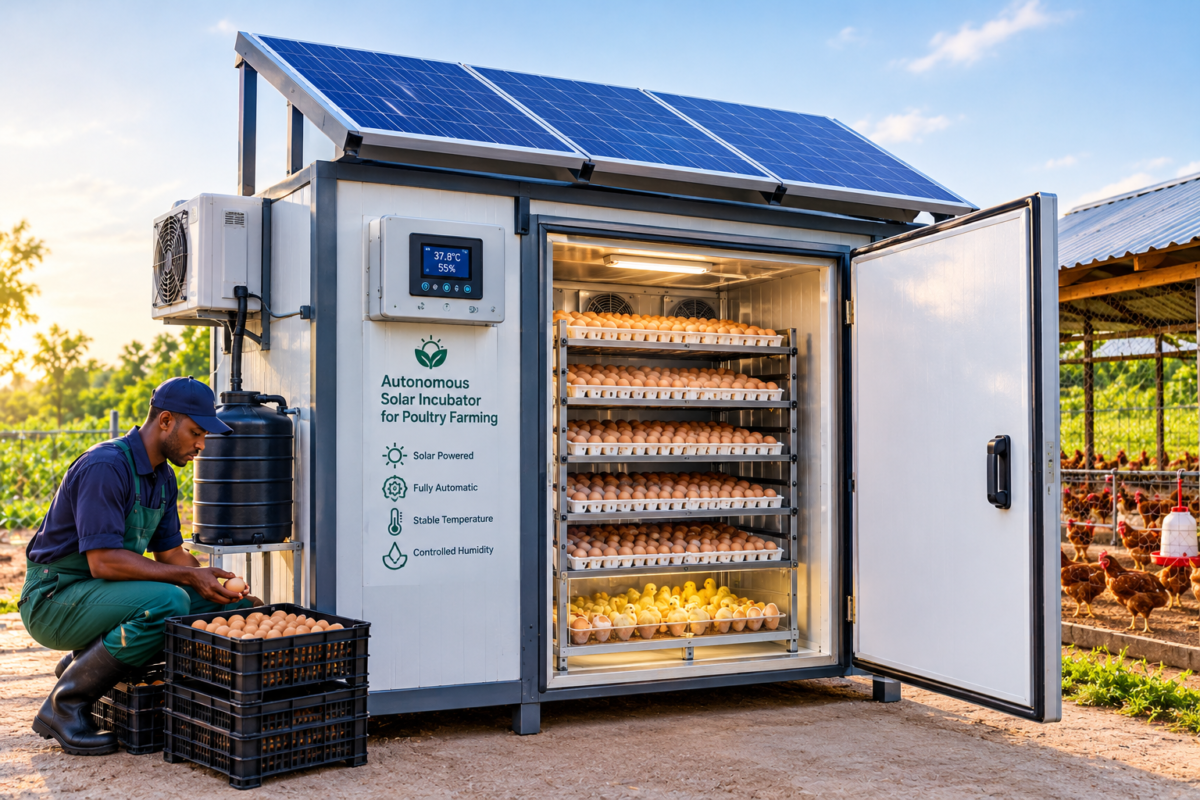
Autonomous solar incubators address this by combining the incubator with its own solar panel, battery and automatic controls, so it can keep running without relying on the grid.
What "Autonomous" Means
A Self-Powered Incubation System
An autonomous solar incubator generates, stores and manages its own power. The level of autonomy depends on the equipment design, battery capacity and energy needs.
Generates Its Own Power
A dedicated solar panel charges the system during the day.
Stores Energy
A battery keeps the incubator running overnight and on cloudy days.
Runs Automatically
Controllers manage temperature, humidity and egg turning without constant attention.
Accepts Backup Charging
Many systems can also charge from the grid or a generator when needed.
The Basics
What Successful Incubation Requires
An incubator recreates the conditions a brooding hen provides. Four factors matter most.
Stable Temperature
Temperature is the most critical factor. Even small, sustained changes can affect embryo development and hatch timing.
Correct Humidity
Humidity controls how much moisture eggs lose. Requirements change during incubation and typically rise in the final days before hatching.
Regular Egg Turning
Eggs need to be turned several times a day for most of the incubation period. Automatic turners handle this reliably.
Fresh Air & Ventilation
Developing embryos need oxygen and produce carbon dioxide, so steady airflow is essential, especially near hatch.
Components
What Makes Up an Autonomous Solar Incubator
Each component plays a part in keeping conditions steady from setting to hatch.
Solar Panel
Generates electricity to run the incubator and charge the battery.
Battery Storage
Stores energy so the incubator runs through the night and periods of low sunlight.
Charge Controller
Regulates charging to protect the battery and extend its life.
Insulated Cabinet
Good insulation holds heat steady and reduces the energy needed.
Digital Controls
Maintain temperature and humidity settings and display current conditions.
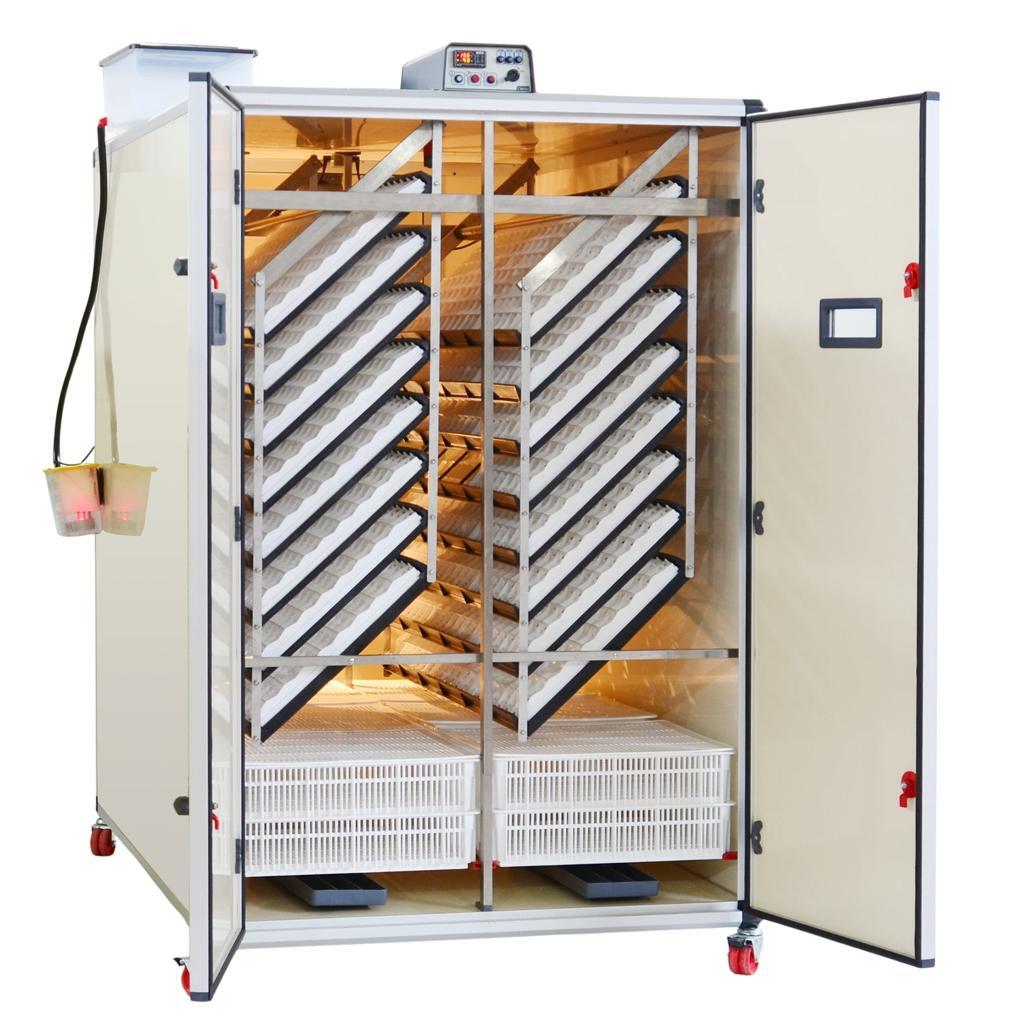
Automatic Egg Turner
Turns eggs on schedule without manual handling.
How It Works
How an Autonomous Solar Incubator Works
Generation, storage and automatic control work together to keep incubation running around the clock.
The solar panel generates power
Sunlight is converted into electricity during the day.
The battery stores energy
The charge controller directs surplus power into the battery.
Controls manage conditions
Heating, humidity and ventilation are adjusted automatically to the settings.
Eggs are turned on schedule
The automatic turner rotates eggs throughout the turning period.
Backup keeps it running
Grid or generator charging can top up the battery during extended poor weather.
Bird Types
Incubation for Different Poultry
Different species have different incubation periods and conditions. Many incubators can be adjusted, and some use interchangeable egg trays for different egg sizes.
Chickens
The most common incubation application, for both layers and broilers.
Ducks
Duck eggs take longer to hatch and often need higher humidity.
Quail
Small eggs and short incubation make quail popular for smaller operations.
Turkeys
Larger eggs with a longer incubation period than chickens.
Guinea Fowl
A hardy bird widely raised on smallholder farms.
Geese
Large eggs with long incubation and specific humidity needs.
Best Practices
Tips for Better Hatch Results
Good equipment works best alongside good incubation habits.
Start With Good Eggs
Set clean, fertile, undamaged eggs, and avoid storing them too long before incubation.
Preheat the Incubator
Run the incubator until conditions are stable before setting eggs.
Choose a Stable Location
Place the incubator indoors, away from direct sun, drafts and large temperature swings.
Limit Opening
Every opening lets heat and humidity escape, especially in the final days before hatch.
Candle the Eggs
Checking eggs with a light during incubation helps identify and remove infertile or non-developing eggs.
Clean Between Batches
Thorough cleaning and disinfection between hatches helps prevent disease.
Who It's For
Who Uses Autonomous Solar Incubators
Solar incubation can serve poultry producers of many sizes.
Smallholder & Backyard Farmers
Hatch your own chicks instead of relying on outside suppliers.
Commercial Poultry Farms
Add incubation capacity to an existing poultry operation.
Small Hatcheries
Supply day-old chicks to farmers in your area.
Farmer Groups & Cooperatives
Shared incubation serving a group of members.
Rural & Off-Grid Farms
Incubate where grid power is unavailable or unreliable.
Training & Agricultural Programs
Hands-on incubation for education and development projects.
Before You Choose
Key Considerations for Solar Incubation
The right incubator setup depends on your scale, your birds and your energy situation. These factors help determine the right configuration.
Egg capacity
How many eggs you want to set per batch, and how often, determines the incubator size.
Species
The birds you plan to hatch affect tray sizes, settings and incubation length.
Battery autonomy
How long the incubator can run without sun determines how well it handles poor weather.
Solar resource
Local sunlight and the panel’s placement affect how quickly the battery recharges.
Installation location
A sheltered, stable indoor space supports steady conditions and reduces energy use.
Controls & alarms
Accurate sensors and alerts help you catch problems before they affect a batch.
After the hatch
Plan for brooding, since newly hatched chicks also need warmth and care.
Benefits
Benefits of Autonomous Solar Incubators
Actual results depend on the equipment, egg quality, management practices and local conditions.
Protection From Outages
Battery storage helps keep incubation running when grid power fails, protecting each batch.
Incubation Without the Grid
Autonomous systems make incubation possible on farms with limited or no grid access.
Lower Running Costs
Solar can reduce or replace the electricity or fuel otherwise used to power incubation.
More Control Over Supply
Hatching your own chicks gives you more control over timing and flock replacement.
Solar Financing
Explore Financing for Your Solar Project
For customers who prefer not to cover the full installation cost upfront, Star Solar can connect qualified customers with independent third-party financing providers.
Financing approval, terms, rates, and eligibility are determined by the independent financing provider.
FAQ
Solar Incubator FAQs
Can a solar incubator run through the night?
Yes. The battery stores energy during the day to keep the incubator running overnight. How long it can run without sun depends on battery capacity and the incubator’s energy use.
What happens during several cloudy days?
The battery carries the incubator through periods of low sunlight. Many systems can also be charged from the grid or a generator during extended poor weather.
Is the incubator fully automatic?
Most autonomous incubators automate temperature, humidity control and egg turning. You’ll still need to set eggs, add water where required, monitor progress and manage the hatch.
Can I hatch different types of birds?
Many incubators can be adjusted for different species, and some offer interchangeable trays for different egg sizes. Check that the settings and trays suit the birds you plan to hatch.
What hatch rate can I expect?
Hatch rates depend on egg fertility and quality, handling, incubator management and conditions, not just the equipment. Good practices make a significant difference.
How do I get started?
Contact the Star Solar Energy team with details about the birds you raise, how many eggs you want to set and your location. We’ll help you understand the options that may fit your farm.
Hatch With Confidence, Powered by the Sun
Tell us about your birds, your egg volumes and where you farm. Our team will help you understand the solar incubation options that may fit your poultry operation.